

How to create a memorable impact statement
“So…what do you do?”
It’s the question nonprofit leaders get the most, and it’s one they seem to have the most trouble answering. After all, you do A LOT. When there are so many details you want to share about your work, how do you boil it down to an elevator pitch without losing the substance?
The answer lies in creating a clear impact statement. You need one line that is repeatable, memorable, and inspiring.
Having a powerful impact statement is your ticket to engaging conversations, pulling new people into your movement, and inspiring them to take action.
In this post, we’ll walk through four questions to help you create your impact statement. This is how you can keep your listener engaged and get them excited about your work with one powerful, easy-to-remember statement.
Prefer to listen? Check out the Sprout Nonprofit podcast.
Limit your focus to ONE thing you do well
We know there’s more to your work than one statement can cover, but picking one thing makes your statement more memorable and shareable. Think about it: if it’s easier to talk about what you do, it’ll be easier for others to spread the word!
You’re going to have to accept that your impact statement is not going to cover all of your programs and offerings. And that’s OKAY. In this case, less is more.
Most nonprofits provide more than one service, program, or outcome for the people, places, and planet they serve. But when it comes to talking about your organization, you need to rein it in.
Think of the big organizations. Make A Wish Foundation. Wateraid. Doctors Without Borders. What each of these organizations have done really well is identify the ONE thing they want to be known for:
Make a Wish makes dreams come true, one wish at a time
Wateraid provides clean water.
Doctors Without Borders sends doctors wherever they’re needed…across borders.
That’s it!
Do these organizations do a lot of different things? Yes, of course they do! But if they were to tell you about every single one of them, you’d get totally overwhelmed.
On the Why Wateraid page, everything is centered on clean water. They could focus on their other initiatives, like gender equality and generational change, but instead they keep clean water at the center.
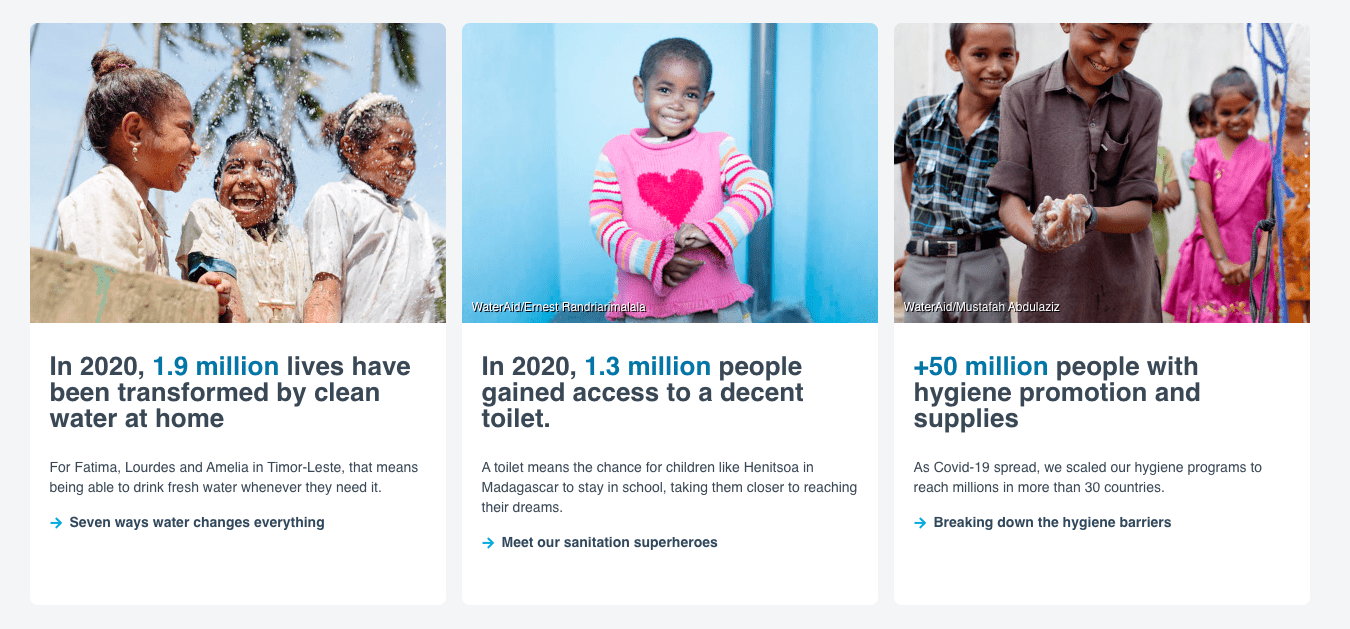
Source: Wateraid
Why does focusing on ONE thing work?
Because people are already overwhelmed by all the problems in the world. There are so many issues to take on, and it can feel impossible to make a significant difference—no one can fix everything that’s wrong with the world. But when you rein in the message and highlight one thing you do, you make individuals feel like they have the power to join a community and spur real change.
So stick to one thing. My friend and colleague Mike Duerkson, founder of Build Good, said it best:
Don’t think you are treating your donors like children because you’re talking to them in very simple forms. You’re actually serving them by helping them understand what is needed of them.
— Mike Duerksen, founder of Build Good
Nonprofit impact statement examples
Three common impact statement mistakes
Let’s walk through some of the biggest mistakes I see when it comes to impact statements.
Don’t worry, I won’t put any nonprofits on blast (that’s not very nice). If you recognize some of these mistakes in your own organization, use this as an opportunity to grow and improve 😎
Mistake 1 ➜ using paragraphs instead of one line
Paragraphs don’t inspire fast action or keep your listener’s attention.
Imagine if the fundraisers at Operation Smile tried to memorize their About page, so they could feel confident talking about their mission. Then, someone at a networking event asks them what they do, and they spout this off (feel free to skim):
“What started as a family-led, medical-mission based organization has grown into a global network of passionate individuals united under the belief that access to safe surgery is not a privilege but a universal human right.
Empowering local health professionals through training and education creates surgical solutions that last. We’re proud that most of our medical volunteers are from the low-and middle-income countries we serve. By partnering with ministries of health, academic institutions, corporations, local health professionals and other organizations, our goal is to change lives and revolutionize how entire health systems deliver surgical care.”
I can’t tell you how many times I’ve asked for an impact statement and received something like this in return.
Paragraphs work on an About page, but not in a real-life conversation. And that’s the whole point of impact statements, isn’t it? To keep the conversation going.
Mistake 2 ➜ sharing your nonprofit status
The moment you mention your 501(c)(3) status is the moment you’ve lost their attention.
No one cares about your tax status (sorry!). They care about the people, places, puppies, etc. that you serve.
Mistake 3 ➜ using jargon or niche language
Industry-specific terms are almost never necessary in an impact statement. Even the most complicated nonprofit doesn’t need to make things complex for their audience.
Bottom line: if your grandma can’t understand what you’re saying, neither will your audience. If you wouldn’t say it out loud to your best friend, you’re probably missing the mark.
Clear is kind, my friends.
Three effective impact statements (use for inspiration!)
Your statement needs to highlight the results of your work. Otherwise, you’re just another nonprofit in a sea of organizations. Who feels the impact of your work? What problem are you solving?
Here are a few one-liners to spark your inspiration.
We ignite a child’s imagination with interactive museum exhibits.
We empower women to start their own businesses with microloans.
We fund medical research so one day no one will have to die from this disease.
See what I mean? The key is to include the purpose or outcome of what it is that you do.
How to write your impact statement ➜ Four questions to get started
Jumping right in to create an impact statement can be a little intimidating. To make things less scary, let’s break it down into four critical questions.
1. What makes your work inspiring?
Think about the people, places, or animals affected by what you do. Why does this work matter? What makes supporters want to get involved?
Your impact statement isn’t about competing with the other 1.3+ million nonprofit organizations out there. It’s about focusing on what you do best.
Feeling stuck? Try asking yourself the following questions:
What are you most proud of?
Why do you care about your work?
Why did you decide to lead this nonprofit in the first place?
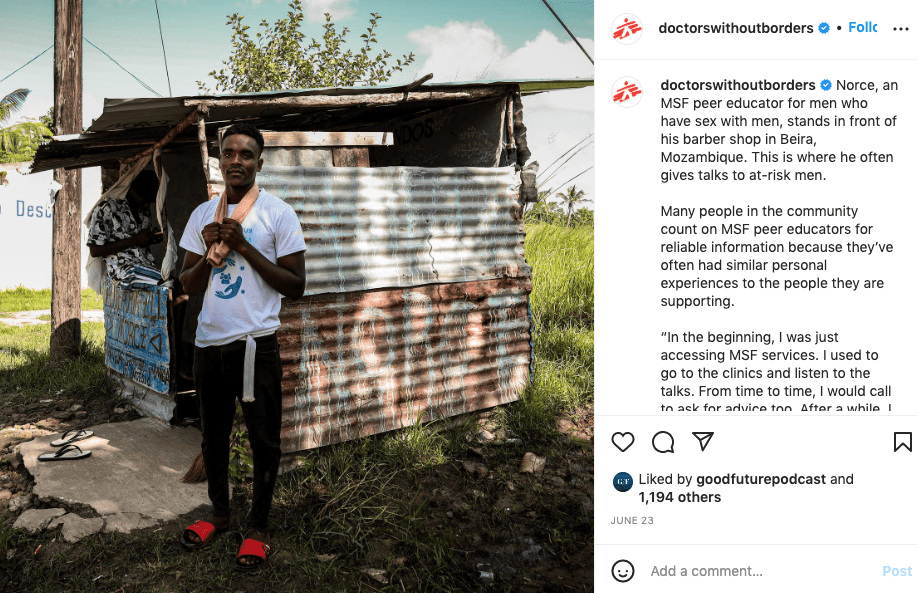
Source: @doctorswithoutborders
Go back to the very beginning—when you started as an executive director—and think about why you felt drawn to your nonprofit. Getting in that headspace will help you uncover what makes your organization unique.
2. What problem are you trying to solve?
I know, you’re probably tired of thinking about your “why.” It’s become somewhat of a buzzword, hasn’t it? But knowing your purpose—your “why”— is essential for nonprofit executive directors trying to communicate about their work.
First, your purpose helps you stay motivated in your day-to-day work. And second, your purpose is KEY to communicating with prospects, new donors, and loyal supporters alike.
So what do you do? And most importantly: WHY do you do what you do?
Not sure where to start? Figure out the problems you address:
Are you focused on ending poverty?
Promoting education for all girls?
Protecting LGBTQ rights?
Whatever it is, write it down. We’ll keep building on your impact statement in the next steps.
3. What does your nonprofit provide?
What’s something tangible that your products, services, or programs provide?
Some examples:
Mentorship opportunities for elementary school kids
Food and shelter for abandoned cats
Scholarships for high schoolers interested in STEM fields
Making wishes come true for cancer patients

Source: @makeawishamerica
Remember to focus on one single offering, even if you provide dozens of programs or experiences. Short and sweet is your friend.
4. How does your work impact the lives of the people you serve?
What results do you bring to the table? Start to think about the long-term impact of your work. If you’re stuck, here are some questions to get you started:
What do participants say about your program?
What are some of the outcomes you’ve seen?
How does your organization meet an essential need in the community?
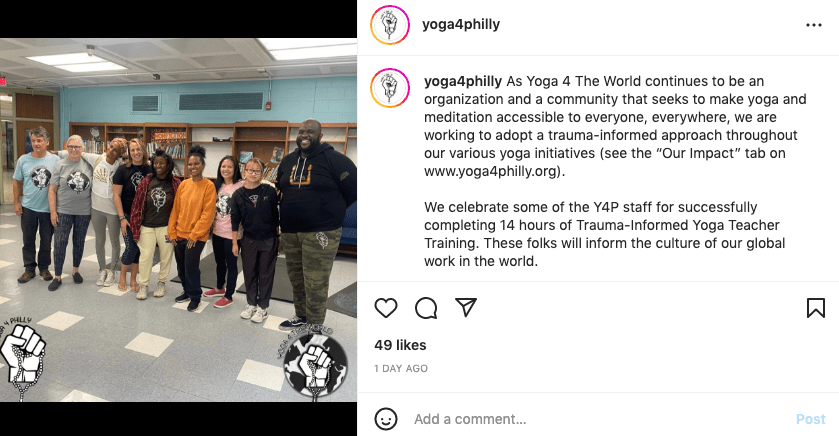
Source: @yoga4philly
Now, take your list and tie the results to your program, product, or services. Here are some examples for inspiration:
Our academic scholarships empower high school students to dream big and go to the college of their dreams.
Our mentorship program for elementary school kids leads to higher academic achievement in high school.
Improved water access allows people to live dignified, healthy lives.
Practice your impact statement out loud
What’s the best way to pull your impact statement together? Practice out loud. I know it feels silly, but trust me: You want your impact statement to flow easily—and that’s hard to do if you haven’t heard what it sounds like.
Remember you are trying to keep your impact statement to one sentence. Simplify and clarify your language. Your statement should sound conversational, not formal or academic.

Treat your listeners like the humans they are and use your impact statement as a blueprint for a natural conversation (not a four-minute speech).
Be clear to connect with the right people
A muddled message takes you nowhere fast. Stop hiding your impact behind a list of programs and jargon. Your impact statement isn’t about impressing people with everything you do under the sun. It’s about giving people enough information to want to learn more (and maybe even get involved!).
